Queer Theory Blog Post Week 6

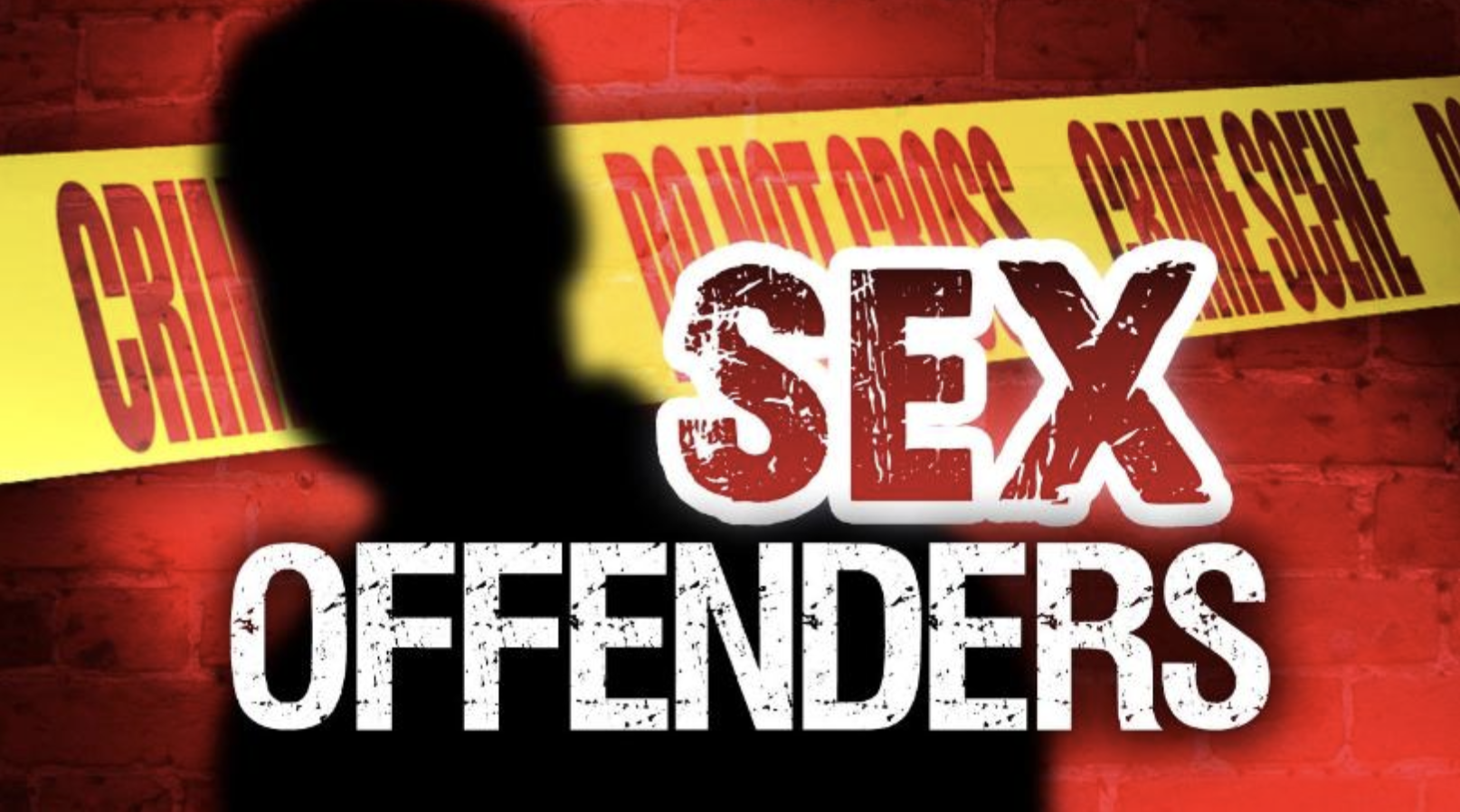
This visual object exemplifies what Gayle Rubin terms “moral panic” because sexual offenders created a huge sex panic in which the media, policy makers, and activists all got involved (WITN.com, 2017). Sexual offenders are a group of people that pose a threat to societal values—one group being pedophiles. As depicted in this photograph, media coverage frames the problems of sexual predators in terms of morality and usually depicts well-known cases as outrageous.

Society catalogues both pedophiles and asexual people as abnormal on the basis of their sexual practices. Asexual people lack sexual desires and are then categorized as abnormal while pedophiles are committing sexual wrongdoings, which society detests.

References

Gayle Rubin, Thinking Sex

Ela Przybylo, Introducing Asexuality, Unthinking Sex

Supreme court strike law banning sex offenders on social media. (2017). WITN.Com, pp. 1-2.

JB Week 5

In the poem “To Live in the Borderlands”, Gloria Anzaldua speaks about “the Borderlands” as both the land surrounding a border (presumably between the U.S. and Mexico due to the juxtaposition of Spanish and English) and a personal direction for processing feelings of being from multiple cultures. The aforementioned usage of Spanish and English interchangeably is sometimes to insert words that do not have accurate translations in English and to simply translate the English words (“To live in the Borderlands/Cuando vives en la frontera”). In both situations, though, this juxtaposition appears to highlight the difference and difficulty between switching languages rapidly in the same way that being multicultural might cause a confusion of identity, especially in the context of a society like the U.S. that integrates elements of other cultures just as easily as it rejects them (i.e. elements of other cultures being strong in many sections of the U.S., sometimes existing alongside intense xenophobia and racism towards them).

In this context, the poem rejects the notion that this means defeat. Anzaldua does not hide the pain of this dilemma, exploring violence (“the mill with the razor…”) and addiction (“fight hard to resist the gold elixir beckoning from the bottle…”), but the poem ends with a more hopeful message: “To survive the Borderlands/you must live sin fronteras/be a crossroads.” Because the Spanish translates to “without borders”, I believe that Anzaldua is arguing that in order to fight against a society that defines culture, identity, and citizenship as being separated by borders, you must internalize the notion that borders do not exist, welcoming everything else in.

CITATIONS

Anzaldúa, Gloria. “To Live in the Borderlands.” Power Poetry, www.powerpoetry.org/content/live-borderlands.

BL Week 5

Gloria Anzaldúa’s poem, “To Live in the Borderlands,” illustrates the conflicting identity of those living in borderlands.  In these regions, there is a great deal of mixing of different cultures, races and political views.  This poem seems to focus on displaying these differences and the interplay of these differences on the borderland people’s identities.  The transitions between English and Spanish is indicative of this interaction of cultures and races. These transitions speak to tell us that the poet and border people have almost this dual sense of identity. They move between languages, cultures and places.  Switching between these two languages also serves to hit home with those that are currently living in the Borderlands. It is indicative of their lives and the interconnection of languages and cultures. Borders are not just physical divides between places as they can exist inside of us. They can be emotional borders, psychological and spiritual borders.  All these borders shape who these people are as individuals and as a society. To survive living in such a place as the “Borderlands,” Anzaldúa suggests that people fight the status quo but that in do so “you must live sin fronteras/ be a crossroads.”   From this last stanza, Anzaldúa is telling her readers to live without borders and be a crossroads.  In other words, you must fight helplessness, adapt to your situation and finally accept your dual identity.

Source:

Gloria Anzaldúa, “To Live In the Borderlands Means You,” in Borderlands/La Frontera: The New Mestiza (San Francisco: Aunt Lute Books, 1987), 194-195.

JM Week 5

The last stanza of Anzaldúa’s poem “To Live in the Borderlands” is instructional in nature and contains two distinct suggestions.  This advice is pointed towards those living in “the Borderlands” which seems to represent  a non-physical space of both racial and gender difference.  Therefore “sin fronteras” suggests that those who do not have a single racial identity or who do not fall into the gender binary must accept all others who are in a similar crossroad of race, gender or both.  The last line of the poem “be a crossroads” follows up on the suggestion of living “sin fronteras”, and extends the invitation to not only accept all others who do not fall into distinct categories of race or gender, but also to act as a crossroads, a point of connection and solidarity for these people.

The transitions between English and Spanish in the poem function as the voice of the author as a bilingual person who most likely switches between the two languages in their everyday life and also as a voice of Spanish speaking person insulting them for being mixed race.  Particularly the lines “ni gabacha, eras mestiza, mulata // … // you’re a burra, buey, scapegoat” show this rejection and name calling the author has endured from other Spanish speaking people in their own terms.    The effect of this is to place the reader more in the author’s position, and to make the insults from Spanish speaking people more real and nuanced rather than substituting in semi-equivalent English insults.

YD Week 5

The author of To Live in the Borderlands, Gloria Anzaldua, is of mixed race as she tells us in second and third stanza of the poem. The poem continues to discuss how torn she is living in the “borderlands” “caught in the crossfire between camps.” The author cannot choose a side as she doesn’t fit in with any specific one as seen in this stanza:

To live in the Borderlands means knowing that the india in you, betrayed for 500 years,
is no longer speaking to you,
the mexicanas call you rajetas, that denying the Anglo inside you
is as bad as having denied the Indian or Black;

The poem switches between English and Spanish which is a linguistic representation of the fact that she is stuck between cultures and doesn’t fit in entirely with any. In other words, to live in the borderlands is to not have a voice and to not fit in with any specific culture. That is why the last stanza of the poem reads: “To survive the borderlands / you must live sin fronteras / be a crossroads.” In English, “sin fronteras” translates to “without borders.” The author is implying that to survive, you have to be a bridge between cultures and to help people from different cultures and ethnicities understand each other.

Gloria Anzaldúa, “To Live In the Borderlands Means You,” in Borderlands/La Frontera: The New Mestiza (San Francisco: Aunt Lute Books, 1987), 194-195.

Week 6

The last few lines of Anzaldúa’s poem suggest that living in the space that she calls “the Borderlands” requires being able to walk freely between the identities that cross or border one another. As the speaker in “To Live in the Borderlands” provides several examples of how identities and languages can cause conflict among one another, they also maintain that it is necessary to allow these elements to converge. By incorporating Spanish into her poem, Anzaldúa demonstrates her ability to fluidly move between cultures and confront what results from these two languages meeting in her poem, fully embodying her statement that living the Borderlands requires one to “be a crossroads.”

The use of Spanish interwoven through English is reminiscent of “Spanglish” and directly addresses people who are bilingual in English and Spanish, effectively cutting off those who do not speak Spanish from fully understanding the poem. Although a monolingual English speaker could look up the meaning of the words, this demands the non-Spanish speaking reader to work to be at the same level of understanding as readers who are bilingual. The use and italicization of the Spanish words in this poem also serve to highlight the weight they hold in the poem. While I was reading this work, I thought of the poem “The Space Between Skin is Called a Wound,” which describes the experience of someone who lives between two cultures but is unable to move between them with the same fluidity that Anzaldúa does because they are not a speaker of two languages.


Reference

Gloria Anzaldúa, “To Live In the Borderlands Means You,” in Borderlands/La Frontera: The New Mestiza (San Francisco: Aunt Lute Books, 1987), 194-195.

To Live in The Borderlands Response

In the poem “To Live in the Boarderlands,” by Gloria Anzaldua, the stanza, “to survive the Boarderlands/ you must live sin fronteras/ be a crossroads” closes the poem. The poem discusses living in the borderland and not fully being one identity or another. Rather than identifying as one thing, the poet is a combination of thing. These different identities may be conflicting with each other. The poem discusses the poets confusion of these conflicting identities. This results in the confusion of where the poets place is within their community where they feel they may not fully belong. In the final stanza, sin fronteras translates to without boarders. This can be understood as to survive the borderlands you must live without borders. In other words, you must be able to cross over from one identity to the next. This is further displayed with the poets use of transitioning between the English and Spanish language. The poet never fully speaks English and never fully speaks Spanish. By doing so they are able to merge their identities and cultures into one. They are able to live in both situations. They can transition from one identity to the other because both identities are theirs.

Gloria Anzaldúa, “To Live In the Borderlands Means You,” in Borderlands/La Frontera: The New Mestiza (San Francisco: Aunt Lute Books, 1987), 194-195.

Blog Post, Anzaldua poem

“To Live in the Borderlands” by Gloria Anzaldua discusses issues in the borderlands between America and Mexico in order to bring up conflicts between identities and facets of a person within an individual. The poem is written in two different languages—Spanish and English—which show that duality has clearly influenced the author’s life.

In order to fully understand the poem, one must understand both the English and Spanish words. I know how to understand the transitions between the two languages because I took an undergraduate course in Spanish. Using both languages may be the author’s way of showing the mingling of two cultures.

In the last stanza of the poem, Anzaldua writes, “To survive the Borderlands/you must live sin fronteras/be a crossroads” (Anzaldua, 3). “Sin fronteras” means to live without borders.  I understand this last stanza to mean that people in the borderlands must conform and assimilate into both cultures. She describes people of the borderlands to have no sense of belonging because they are torn between two cultures, and have a new culture that has formed in the borderlands.

-CB

References

Anzaldua, G. “To Live in the Borderlands.” Borderlands-La Frontera. Aunt Lute Books, 1987, pp. 194-195.  http://www.revistascisan.unam.mx/Voices/pdfs /7422.pdf

MB Week 4

The last stanza of Gloria Anzaldua’s poem To live in the borderlands means you… reads “To survive the Borderlands/ you must live sin fronteras/ be a crossroads.” If you inhabit  seemingly contradictory or mutually exclusive identities, it can be hard to embrace all of them. However, the places where those identities intersect, at least in my experience, are often the most authentic parts of a person. This is what she means by “crossroads.” To live without borders between identities is to survive and truly thrive. This stanza means that to live well with multiple identities is to erase the lines separating them, and to be a holistic, whole person.

The transitions between English and Spanish feel very natural to someone with an understanding of Spanish. The words she chose to include in Spanish seem to be words that are commonly understood, even by those who are not fluent in Spanish. This is significant because it maximizes the number of people who will relate to the poem by maximizing the number of people who understand all of the words.

Reference

Anzaldua, “To Iive in the borderlands means you”

YD Week 4

Embodiment in post-racial terms in the context of the aforementioned quote indicates that fetishizing blackness in post-racial terms, or in other words, fetishizing blackness while erasing black identity, reinforces the racial power inequalities that be. Furthermore, this erasure has caused a “white queer politics of injury” that presents white queerness as the state of being ‘other’ without taking into account the major privileges involved in racial identity in order for white queers to take the stance of a victimized ‘other.’ By ignoring race in talking about queer identities, a major privilege is thus ignored and it is therefore counterproductive to view queerness in terms of the neoliberal concept of being ‘colorblind.’ As society stands, race is intimately intertwined with all a person’s identities whether such intimate involvement is acknowledged or not. By not acknowledging race and by ignoring it in queer theory, white supremacy is further enabled with the framing of being progressive, rather than addressing the inequalities and power structures that progressive politics are intended to address and dismantle. Amber Musser made clear the importance of addressing race in the context of all of a person’s identities in “Re-membering Audre,” “While Lorde was unapologetic about claiming a multiplicity of identities—mother, poet, warrior, lesbian, black—these identities made her aware of multiple forms of marginalization and enabled her to imagine a feminism robust enough to tackle difference and create authentic community.” However, in labeling Lorde as queer, rather than as a black, mother, poet, warrior, lesbian, her racial, maternal, personal identities are erased for the sake of being ‘colorblind,’ but the reality of this erasure only supports the “hegemonic understandings of race,” as Reed put it. Clearly, although queer theory is useful for addressing issues of queerness, its current state of whiteness means it still needs to take into account other identities in order to develop a fuller, more inclusive, more progressive understanding of identity politics and how queerness is seen in the contemporary societal context.

Alison Reed, “The Whiter the Bread, the Quicker You’re Dead. Spectacular Absence and Post-Racialized Blackness in (White) Queer Theory”

Amber Jamilla Musser, “Re-membering Audre. Adding Lesbian Feminist Mother Poet to Black”