Instagram Post 5

#LGBTQexperiencesUSA #emoji #prideflag #rainbow

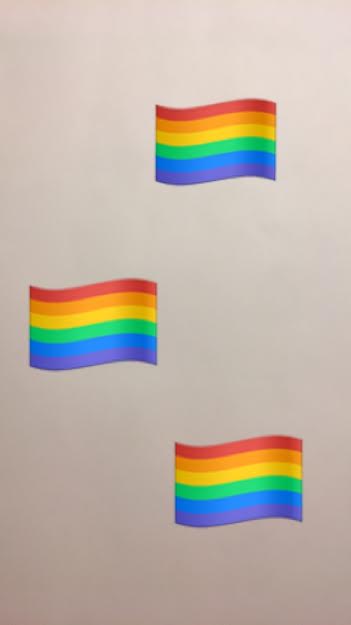
The image I have chosen to provide is the pride flag emoji. The pride flag emoji was released in March of this year, after a push for representation and inclusion of the LGBTQ+ community. The emoji is a tiny picture of the pride flag, and can be accessed via the Apple keyboard. I chose this image because the establishment of the pride flag as an emoji meant the LGBTQ+ community could see representation of themselves in our technologically- immersed world, especially with the role emojis have in pop culture.

“There’s Now a Pride Flag Emoji! – BBC Three.” BBC News, BBC, 7 Mar. 2018, www.bbc.co.uk/bbcthree/article/79d08e2a-cda3-426d-acd3-3fd404ee6305.

-ML

Instagram Post 4

I took this picture when I went to the Women’s March on Raleigh, the day after the inauguration of Donald Trump. There was a crowd of thousands of people in downtown Raleigh, with many people holding signs such as the one in the picture advocating for gay rights. I chose this image because it captured part of a historical event that was close to my home, and made me aware of the apparent lack of inclusivity and intersectionality of the movement.

#LGBTQexperiencesUSA #WomensMarch #HumanRights #LGBTQrights

-ML

Instagram Post 3

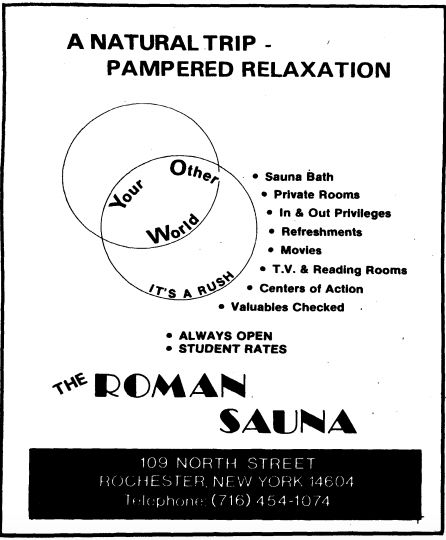
Gay bath houses were places that men could meet and hookup, in an environment that permitted such activity. That is not to say that bath houses were safe from police raids, because such instances were known to occur. Bath houses were also places that STD transmission was common, due to frequent unprotected sex. This particular ad from The Empty Closet advertises a bath house in Rochester that offers different amenities, including a sauna, private rooms, and refreshments and movies. I chose this image because I thought it was interesting how the bath houses were alternative meeting spots for gay men, as opposed to just bars.

#LGBTQexperiencesUSA #Bathhouse #Gay #STDS #Hookup

Source: The Empty Closet, January 1976

-ML

Major!

From watching the film Major!, I learned about the terrible treatment and abuse of transgender women in the prison system. I have known that the prison system of the United States is corrupt in its treatment of inmates, but I was unaware of the way that transgender women are singled out and abused. Miss Major talked about the ways that she was singled out from the rest of the prisoners, and how the prison guards shaved her platinum hair and eyebrows, and forced her to walk around the prison naked. They exercised their power to strip her of her identity and make her vulnerable. I learned from the film that unfortunately, stories like Miss Major’s are not unique, as many transgender inmates face similar abusive treatment. They are humiliated, raped, and tortured. Transgender women are overwhelmingly kept in solitary housing units, under the guise of “protection”. This film left me wondering as to why there is such a lack of policy protecting transgender people who are incarcerated, and why, despite many reports being made of rape and abuse, there is a severe lack of action and justice. Video cameras are all over prisons, so there is no reason that offending prison guards shouldn’t be held accountable.

-ML

AIDS Activism

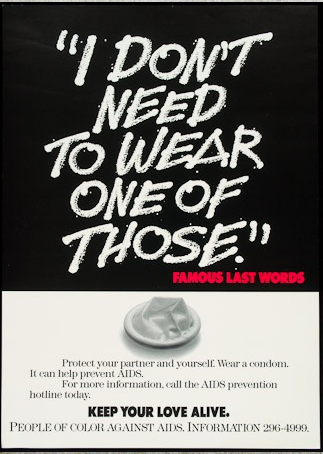
This poster really struck me, especially with the “Famous Last Words” in the red text at the bottom. It made me think about how many people died as a result of contracting AIDS from choosing to have unprotected sex, when they could have prevented the disease by wearing a condom. This poster points out the potentially tragic effects of AIDS, which was similar to the issues touched on by the AIDS Memorial Quilt- The Names Project we saw at the special collections. It is saddening to think about how many lives could have been saved by wearing a condom, which is what the poster is advocating.

“I don’t need to wear one of those.” | River Campus Libraries. (n.d.). Retrieved February 20, 2018, from http://aep.lib.rochester.edu/node/40841

-ML

Instagram Post #2

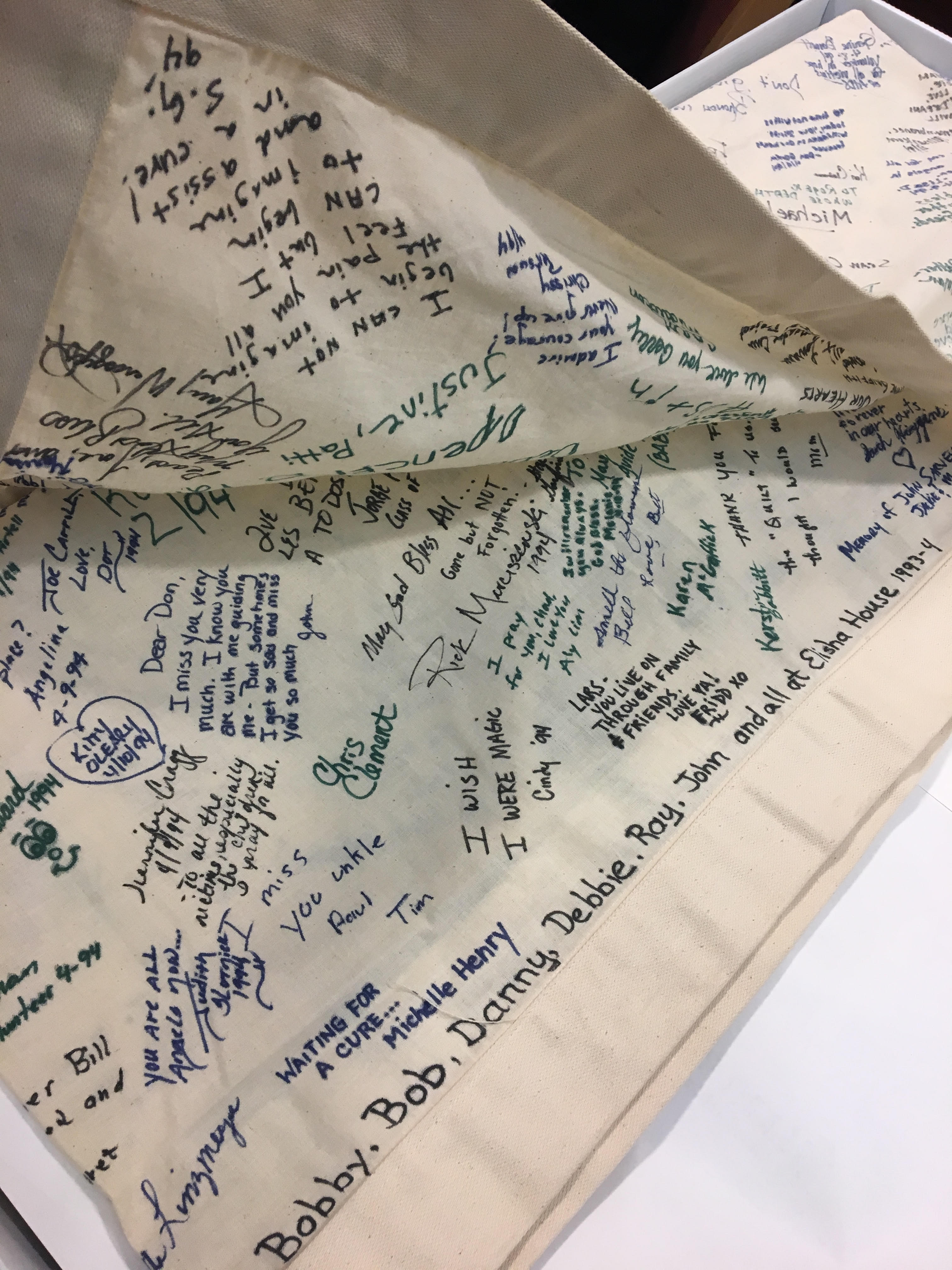
This is a sheet of canvas that was signed by University of Rochester students and members of the community in 1994 as part of the NAMES Project AIDS Memorial Quilt. The project features a massive quilt (this section of the quilt is 12’ by 12’), and commemorates those who have died from AIDS. I was moved by the messages left on the sheet, where people addressed friends and family who have died from the disease, or longed for a cure.

#LGBTQexperiencesUSA #NAMESproject #AIDS #cure

-ML

Special Collections and Inclusion

One of the objects from our visit to the Special Collections that particularly stood out to me was an article for the Empty Closet called “Lesbian Life and Happiness In Rochester”, which was published in the April 1985 paper. The article describes a lesbian couple who had been together for 50 years having to keep their relationship a secret, and buried in lies. Lies that they were only together to cut the cost of living, never able to reveal that they were lovers. This stood out to me because I didn’t think much of the lengths to which same- sex couples had to go in order to protect themselves. The article also describes resource centers such as the Lesbian Resource Center, the Gay Alliance, and the Metropolitan Community Church. I think that this article is important to campus and city communities because it acknowledges the difficultiy of being in a same- sex relationship, and the fears that society won’t accept it.

The day after the inauguration of Donald Trump, I went to the Women’s March on Raleigh. The streets of Downtown Raleigh were flooded with people, both men and women. In my ignorance, I did not notice that the turnout at the march was nearly all white men and women until I went home and read about the Women’s March. Several of the articles mentioned that while the aim of the Women’s Marches was positive, it failed at achieving intersectionality and was only focused on a brand of white feminism. This became more apparent when I went on Instagram, and in the comments section of a feminism account I follow, it discussed the problematic nature of “token selfies” of the Women’s Marches. This made me upset because while it came across like an attempt at inclusivity and visibility, the majority of the posts seemed like only a pass at celebrating diversity.

-ML

Instagram Post

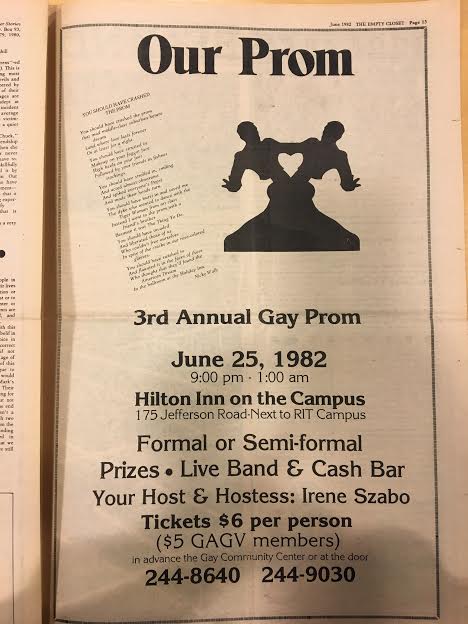
Hello All! For my Gender and Women’s studies class, LGBTQ Experiences U.S. History, I am doing a post. This is a newspaper advertisement from the gay newspaper, The Empty Closet. The advertisement is for a prom at the Hilton Inn, and featured a live band, prizes, and a cash bar. The 3rd Annual Gay Prom was a semi- formal or formal event, and was a way for LGBTQ people to get together. I find this interesting because it was a way for people to meet and enjoy an event that they would have otherwise been excluded from. #LGBTQ #LGBTQexperiencesUSA #gay #pride

Blog Post 2

I learned that the The Stonewall rebellion was not the first time that drag queens and gays fought back against the police, since there had been many other instances of rebellion predating this event. However, the Stonewall rebellion gets more publicity because it has been dubbed as the most commemorable. The location of Stonewall added to the hype because it occurred in New York City. Other reasons that Stonewall is considered a more memorable is because it was seen as a “shared memory of oppression,” where drag queens that were sick of the abuse and police brutality fought back against the police when they raided the bar. The political relevance, violence, and news coverage of the rebellion made it more memorable than other transgender movements of rebellion. Nowadays, the Stonewall rebellion holds significance in how it brought trans liberation movements to the public eye, and is marked by the annual gay pride parade, which raises awareness and brings visibility to the marginalized members of the transgender community.

Armstrong, E. A., & Crage, S. M. (2006). Movements and Memory: The Making of the Stonewall Myth. Retrieved January 30, 2018, from https://learn.rochester.edu/bbcswebdav/pid-1323847-dt-content-rid-4557783_1/courses/GSW210.2018SPRING.83914/Armstrong%20Movements%20and%20Memory%20The%20Making%20of%20the%20Stonewall%20Myth.pdf

Until I took this class, I had not heard of either Marsha Johnson or Sylvia Rivera. Sylvia Rivera was born as Ray Rivera, and began dressing in drag in 1961, the same year that she left home at the age of 10. Growing up, Sylvia lived with her racist Venezuelan grandmother, after her mother killed herself at age 22. Her grandmother sent her to all- white Catholic schools, wishing that Sylvia was white and female. Throughout her life she experienced violence and aggression from not only police, but other citizens as well. Sylvia was arrested in the late 1960s, where she was jailed for 90 days. Sylvia was marginalized by other gays, lesbians, and transgender people because she was a poor sex worker and a woman of color. She participated in the Stonewall riots, and spoke at the 1973 Christopher Street Liberation Day rally in Washington Square Park. To provide a safe space for drag queens to live, Sylvia opened up STAR (Street Transvestite Action Revolutionaries) with Marsha Johnson, which provided hotel rooms that transvestites could live in.

Press, U. (n.d.). Street Transvestite Action Revolutionaries: Survival, Revolt, and Queer Antagonist Struggle. Retrieved January 30, 2018, from https://untorellipress.noblogs.org/files/2011/12/STAR-imposed.pdf

-ML